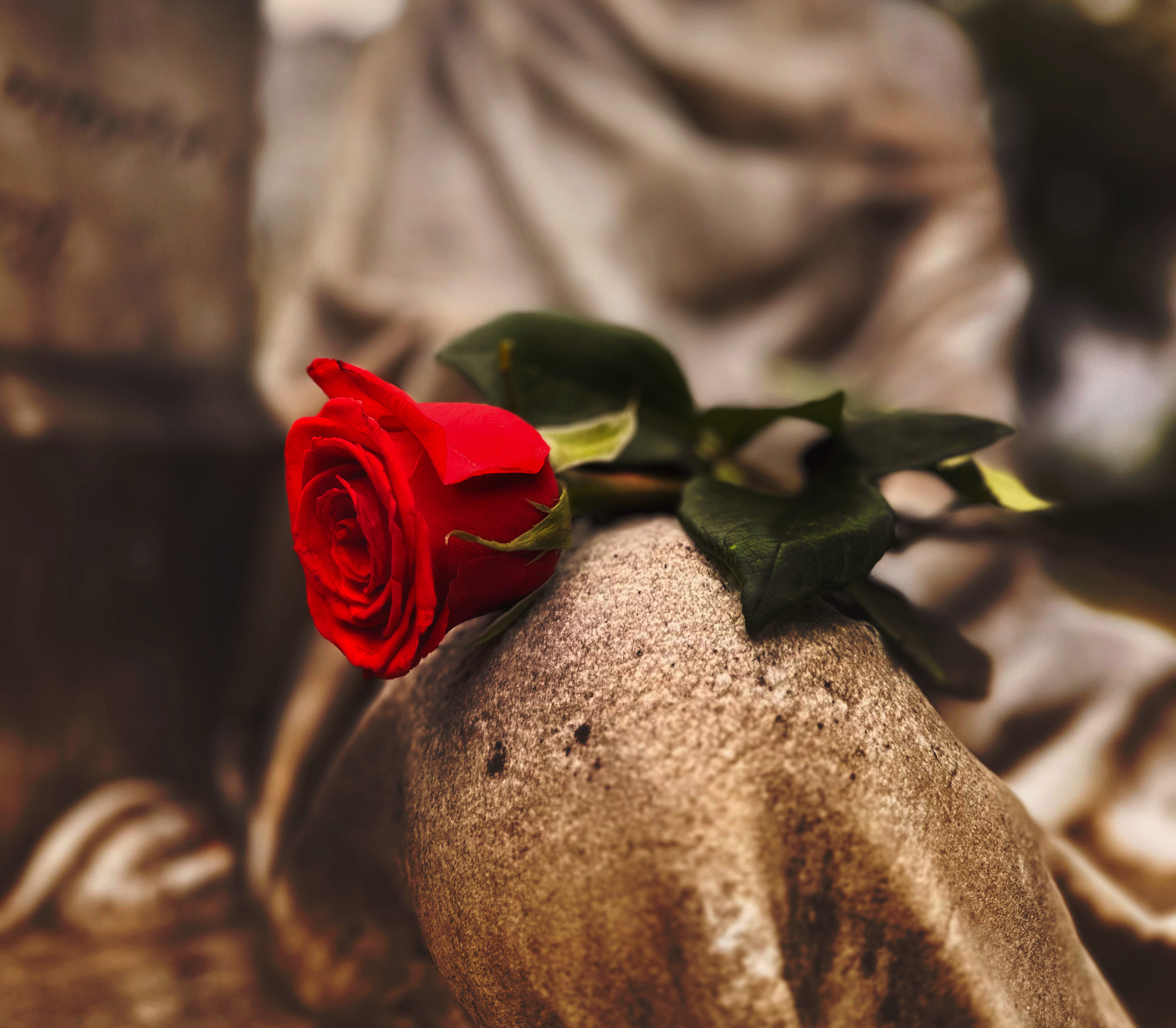
I hadn’t planned on Japan. It wasn’t on the list of must-sees, nor part of a vision board or dream map. I was living in New York City — thick with rhythm, cement, and ambition — when Kyoto called not through logic, but through a sequence of soft, undeniable alignments. One invitation. One companion chosen to travel with me. Everything paid for. My studio Director simply stopped by my desk one day and casually whispered, “How would you like to go to Japan?” By no means was this a normal request, and it was intentionally kept quiet. And so, I went. No plans, no expectations, absolutely no foresight. I just remember packing my bags and boarding a plane, like any other flight. What could one do, after all, when a foreign land reaches through the veil and pulls you by the thread? I had never left the country before. This might be the perfect representation of how I live life, sensing alignment and fully trusting the unknown.
I want to compare what happened next to, perhaps, jumping into the ocean and suddenly being shocked by a saturated coral reef world you had no idea existed beneath the surface. I was transported. Kyoto was unlike anything I had known. A living poem. Stone and moss holding hands. Water whispering beneath bridges. I walked through gardens that breathed like temples and temples that held silence like breath. A rainbow appeared at Kinkaku-ji, also known as the Golden Pavilion, and our guide held an umbrella over my head the entire time we walked through the rain. A true gentleman. At an old restaurant, they draped a $30,000 historic, silk, embroidered kimono that trailed across the floor, over me, proclaiming I was a princess. Who was I? Where was I? At another restaurant, we sat in a private dining room with one table, just the three of us, glass doors opened wide to gushing rain over a private courtyard. Something in me quieted. Something in me listened. Perhaps it was a final benediction. A closing chapter, before returning to the South, to Savannah, to the work waiting in the soil there. But I didn’t know that at the time. I didn’t know I would be leaving New York yet. After 6 years of relentless, back-breaking hours in the studio, day in and day out, it seemed Japan was a true gift and serendipitous send-off. Kyoto had something to show me, and I went without a care, not knowing the language. But also, before Japan, someone from the distant past had closed a chapter. After Japan, someone else from the distant past returned, and that became the gateway to Savannah. In every way, Japan was a bridge between timelines.
On the final day of our week-long trip, our guide dared to squeeze in one more stop, before we rushed to the airport: The Fushimi Inari Shrine. It was definitely an ambitious choice because any number of delays on the hike could have delayed our flight (and we did take detours). He picked it, not us. We were just along for the journey, and at no point did we prepare ourselves for the next destination. The shrine is over 1,300 years old, and is one of the oldest and most significant shrines in Japan. It is dedicated to Inari, the Shinto god of rice, prosperity, and success. The shrine itself is the head shrine for over 30,000 Inari shrines across Japan. Interestingly, foxes are revered as messengers and guardians of Inari, and are often depicted holding items like keys, scrolls, or jewels, each with symbolic meaning. Foxes have become a regular visitor on my walks in Savannah, so I see a connection. The vermillion Torii gates (red, again) represent gratitude for blessings received and requests for future prosperity. A sacred spine, each gate a threshold, each threshold a prayer. In this case, red is a barrier between the impure world and the pure realm of the shrine. They say there are 10,000 gates. Maybe more. They weave together like sacred text written only in passage. But something was wildly out of tune the day we visited. Or, in tune…
Spiders.
Not one. Not ten. But thousands. Tens of thousands. Every single gateway had large, colorful spiders interlaced among and between, like there was an explosion. We were not warned, and it almost felt like a dirty, spiritual trick or curse. At the time, you could not read about this online. I researched Torii gate spiders, after returning home, and not a single thread mentioned them. Knowing I didn’t like spiders, my father even joked that I would find enormous spiders in Japan the day before I left, and I heard the sarcasm and did not take him seriously. Here I was, on our final mountain climb, walking through a tunnel of oversized, mythic spiders that waited until the last moment to reveal themselves. I was not a woman who feared easily. But spiders…spiders had always disturbed me. And now they formed a canopy above me — a strange cathedral of webs and watchers I had to physically walk through for miles, without pause, without turning back. Their eerie presence cannot be overstated.
Each Torii gate held a web. Not delicate filaments of absence, but thick, gleaming, golden threads. Massive, strung across paths and beams. Their creators: Jorōgumo, the Joro spiders of Japan. Named in old tales for their beauty and deception, for weaving illusions, for binding men in silk. In some cultures, they are “fortune tellers.” Why here? Why at the gates? Why on this mountain, and why now? I kept walking. Step after step. Through the red tunnels, through the golden webs, through the weave of myth and nature. And something in me began to shift. The spiders, it seemed, were not meant to frighten. They were symbols. Weavers. Guardians. They had strung their homes across thresholds not to block passage, but to mark it. They did not build on mountainsides or tree trunks. They built on gates. What are gates but moments between moments? The space between what was and what is becoming? And what is the spider if not the one who spins meaning from emptiness? Perhaps they were not warning me. Perhaps they were welcoming me.
As I descended the mountain, the red gates flickering past me like flames, I felt it again — that slow, steady pull from something ancient. The same pull that brought me to Kyoto. The same pull that would call me back to Savannah. A place I hadn’t chosen, but which had chosen me through a golden spiral shell on the beach. I did not speak the message aloud. But it wove itself into my skin. Now, when I reflect on the gates and weavers, I remember the Joro spiders of Inari not as fear but sacred instruction: We are not blocked by what we fear, we are anointed by it. Chosen to carry it through. And I still walk among thresholds but not alone. Never alone.
Why Kyoto? Because Kyoto holds the geometry of grace through restraint. It is a city where silence is form, and beauty arises not from what is added, but from what is left undisturbed. Kyoto doesn’t shout. It whispers in perfect proportion. And that is precisely what Savannah was asking me to learn, before I returned to her soil. I didn’t travel abroad. I entered a resonance field. It felt like I had leapt into different time zones, entirely, transported not by my steps but something greater. Savannah carries the frequency of earthrooted memory. Kyoto carries the frequency of timeless stillness. And I, moving between them, became a living bridge, not a tourist. My presence in Kyoto wasn’t about going somewhere new. It was about retrieving something I would later plant in Savannah. I was given Kyoto’s precision, its devotion to hidden thresholds, its reverence for empty space, so that The Forest City would not just be lush but listening.
Why was everything paid for? Because true invitations are never transactional. They arrive through the currency of alignment. They cannot be bought. They are issued like sacred passports. And Kyoto said: Come. Maybe because she knew I would carry her home. Whispers from Kyoto are now part of The Forest City, not visibly, but vibrationally. And anyone who walks through this southern forest might feel a stillness that came from elsewhere, not knowing why their breath deepens. Kyoto was not a visit. It was a transmission and symbolic saturation. A moment where an amplified, single motif could not be ignored. Yes, it was eerie, but that unease is the body’s recognition that something sacred is approaching, and you’ve just crossed into it.
The Jorō Spider: what does it mean? The Jorō-gumo in Japanese folklore is not merely a spider. She is a shapeshifter — a weaver of illusions and truths. She represents the threshold between realms, of seduction and deception, yes, but also creation, containment, and liminal mastery. The word “Jorō” itself carries feminine mystique. The kanji 女郎 implies woman of the night, but also one who dwells in transition. This spider is not a pest. It is a guardian, not of purity, but of the unseen labyrinth between dimensions. And where did I encounter her?
At the gates.
Why the Torii gates? Torii gates are not decorations, they are frequency portals, or transitional spaces that mark the movement between profane and sacred. Between world and spirit. Between what was and what will be. I walked through 10,000 thresholds, and on each one, a spider had spun its web. This is not exaggeration. It is not coincidence, either, but written in silk and shadow.
What were they doing there? They were not intruding, they were weaving between worlds. Spiders do not chase, they wait. They hold tension in stillness and create spaces where something else must move first. This is a spiritual teaching. Every gate you walk through must be woven with pause, or the crossing will be hollow. The spiders reminded me: You are not just passing through thresholds, you are shaping what moves between them.
Why tens of thousands? Perhaps I needed to remember the magnitude of what I was stepping into. My return to Savannah was not a casual relocation. It was the next spiral of my soul’s weaving, and I waited years for the right timing. Before that move could occur, maybe I had to be initiated into the art of the weaver. I was no longer just the seed. I was the one who now spins. Between cities, between selves, between timelines. The spiders came to say: “You are entering a role of deep patterning. Pay attention.” Strangely — or perhaps in perfect timing — I almost lost touch with Kyoto’s powerful message, years later, until I ran into The Priestess. I am certain she was a reminder of where I had already been.
But I feared them, yes. Because that fear meant my ego couldn’t override the moment. It was a holy disruption, forcing me to feel my edges, right before I stepped into great expansion. Sometimes the sacred dresses as the uncomfortable, so we don’t reduce it to something cute and safe. The spiders made sure I remembered the gates with every cell of my being. And I did.
It was a moment of liminal passage from Kyoto to Savannah. I didn’t walk through 10,000 gates, I was walked through by 10,000 spiders spinning the web of becoming. The spiders were threaded with memory, spun by hands not my own, but reaching through me just the same. It was not ascent but descent into the pattern beneath all things.
Now, back in Savannah,
The same silk spins in the air,
The same thread.
The Forest is not a place.
It is a loom.
And we are no longer seeds, alone.
We are weavers at the gate.

You might also like